Islam Controversies 23 Questions Every Muslim Should Answer Before Debating Christianity: Introduction
23 Questions ...

There is an old saying often attributed to Abraham Lincoln:
"It is better to remain silent and be thought a fool than to speak and remove all doubt."
Whether Lincoln actually said those words is beside the point. The lesson remains timeless.
Far too often, Muslims enter discussions about Christianity armed with conviction but lacking preparation. Likewise, many Christians critique Islam without first understanding what Muslims actually believe. Instead of meaningful dialogue, both sides frequently speak past one another, repeating familiar slogans rather than engaging the evidence.
This book was written to address that problem.
It is not intended to mock Christianity.
It is not intended to insult Christians.
Nor is it intended to discourage respectful dialogue between people of different faiths.
Rather, it is written from the conviction that every Muslim should understand both his own religion and the questions most commonly raised about it before engaging in debates concerning Christianity.
Knowledge should always precede argument.
Throughout Islamic history, scholars have never feared sincere questions. The Qur'an itself repeatedly invites mankind to think, reflect, reason, and examine the evidence.
That is the spirit in which this book is written.
You will quickly notice that every chapter begins with a question.
This is intentional.
Questions invite reflection.
Questions expose assumptions.
Questions often reveal that the strongest beliefs are not those that avoid examination, but those that survive it.
For that reason, this book adopts what might be called a Socratic approach. Rather than simply asserting conclusions, it asks readers to consider the historical record, the biblical text, the Qur'anic text, and the conclusions that naturally follow from them.
Readers may ultimately disagree with my conclusions—and that is perfectly acceptable.
My hope is simply that those conclusions are considered honestly.
Throughout this book, I will carefully distinguish between three different categories:
First, what the Qur'an explicitly teaches.
Second, what historians and biblical scholars conclude from the available evidence.
Third, my own analysis as a Muslim attempting to reconcile those two sources of knowledge.
These categories should never be confused.
Whenever possible, I encourage readers to verify every citation, consult the original sources, and examine the evidence for themselves.
Every chapter also follows the same structure.
First, I present the question.
Second, I explain why the question matters.
Third, I present the Muslim response.
Fourth, I examine the historical and textual evidence.
Fifth, I present what I believe to be the strongest Christian response.
Finally, I explain why I remain persuaded by the Islamic position before leaving readers with several questions to consider on their own.
My purpose is not to "win" arguments.
Truth does not require arrogance.
Nor does faith require hostility.
My purpose is to encourage Muslims to become better students of their own religion while understanding Christianity accurately and fairly.
Likewise, I hope Christian readers will recognize that these chapters are not written out of animosity, but out of a sincere desire to discuss important theological questions honestly.
If Islam is true, it has nothing to fear from careful investigation.
If Christianity is true, it should welcome the same examination.
Either way, every sincere seeker of truth benefits when questions are asked respectfully and evidence is considered carefully.
That is the purpose of this book.
May Allah guide us all to that which is true.
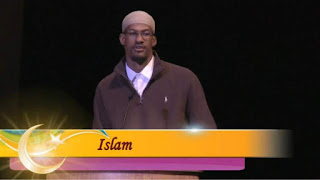
— Tajuddin "Brother Taj" Ashaheed
Table of Contents
Part I — Revelation
1. What Is the Injīl?
2. Is the New Testament the Injīl?
3. Did the Qur'an Confirm the Bible We Have Today?
4. What Does the Qur'an Mean When It Commands the People of the Gospel to Judge by the Gospel?
Part II — Jesus
5. Did Jesus Ever Claim to Be God?
6. Why Did Jesus Pray If He Was God?
7. Who Is the Messiah?
8. Did Jesus Come to Abolish the Law?
Part III — The New Testament
9. Who Wrote the Gospels?
10. Are the Gospels Eyewitness Testimony?
11. Why Were Four Gospels Accepted While Others Were Rejected?
12. How Did the New Testament Become the New Testament?
Part IV — Paul
13. Did Paul Change Christianity?
14. Did Paul and James Teach the Same Religion?
15. Why Did Paul Continue Temple Rituals?
16. What Did Paul Mean When He Said, "I Became All Things to All People"?
Part V — Christian Theology
17. If Allah Is All-Powerful, Why Can't He Become a Man?
18. Why Doesn't Islam Believe in the Trinity?
19. Why Doesn't Islam Call God "Father"?
20. Why Did Allah Send Multiple Revelations?
Part VI — Difficult Questions
21. Why Didn't Allah Preserve the Injīl?
22. Do Old Testament Prophecies Really Point to Jesus?
23. What Is the Strongest Historical Case for Islam?
"Indeed, in the creation of the heavens and the earth and the alternation of the night and the day are signs for people of understanding."
— Qur'an 3:190


Comments